
What makes a solar system dependable is not simply the number of panels, but how well the design matches a property’s electricity use. That’s the practical starting point for professional solar planning: consider your energy needs and existing electrical setup before choosing equipment.
It’s common to have questions about how panels, an inverter and battery storage work together, or how a new system connects to existing wiring. A suitable design considers what you use, when you use it and which essentials you want supported. Installation and commissioning also involve integrating the inverter and battery system with the property’s electrical infrastructure.
This guide explains common system configurations, what installation involves and what information helps shape a system for a home or small office. It also outlines how Computech-Solutions handles residential and small-office solar installation across South Africa.
Key Takeaways
- Start with your property’s electricity use and priorities when planning a solar system.
- Panels generate electricity, an inverter converts it, and battery storage can support different needs depending on the system configuration.
- Compare grid-connected, hybrid and battery-backed setups by their storage options and relationship with grid supply.
- For solar installation pretoria planning, account for site conditions and existing electrical infrastructure.
- Computech-Solutions installs and commissions residential and small-office systems, integrating solar inverters and battery backup with existing electrical infrastructure.
Why consider solar installation for your property?
A more manageable energy setup starts with understanding what your property needs, rather than assuming solar will remove every power concern. Solar can reduce reliance on the grid, but it doesn’t automatically eliminate grid use. The result depends on system design, available generation, storage and when electricity is used.
Each component has a different role. Solar panels generate electricity from sunlight. An inverter converts that electricity into a form the property’s electrical system can use and manages energy flow according to its configuration. Optional battery storage can hold generated electricity for later use; how and when it supplies power depends on the system design. These components work together with the equipment needed to integrate them with the property. For background, see this overview of photovoltaic systems.
Solar installation is the design, integration and commissioning of equipment configured around a property’s energy needs and existing electrical infrastructure. Choosing panels or an inverter in isolation doesn’t establish how the complete system will operate or which loads it can support. Planning needs to account for the equipment as a whole and its connection to the property.
What does a solar installation include?
A solar system combines equipment planned around a property’s electricity use. Depending on the configuration, it may include panels for generation, an inverter for conversion and control, and battery storage. Not every system uses every component. Installation also involves integrating and configuring the selected equipment with the existing electrical infrastructure, taking into account how the property is wired and powered.
Which property needs can solar help address?
For a home, planning may start with deciding which everyday essentials matter most during a supply interruption, or how to use more solar-generated electricity during normal routines. A small office may have different priorities, such as identifying the equipment and work activities that need support. In either case, describe actual use before settling on a configuration instead of relying on a broad promise.
Start by noting:
- Which appliances, devices or work equipment are essential.
- When those loads are usually used, including daytime and evening routines.
- What power challenges the system is intended to address.
This information connects the system’s intended role with the property’s real demand. Capabilities depend on the final configuration and the amount and timing of electricity used. A setup designed around selected essential loads has a different purpose from one intended to serve a broader range of property use. For residential and small-office projects, clear priorities help shape inverter and battery integration around the electrical infrastructure already in place.
How solar panels, inverters, and batteries work together
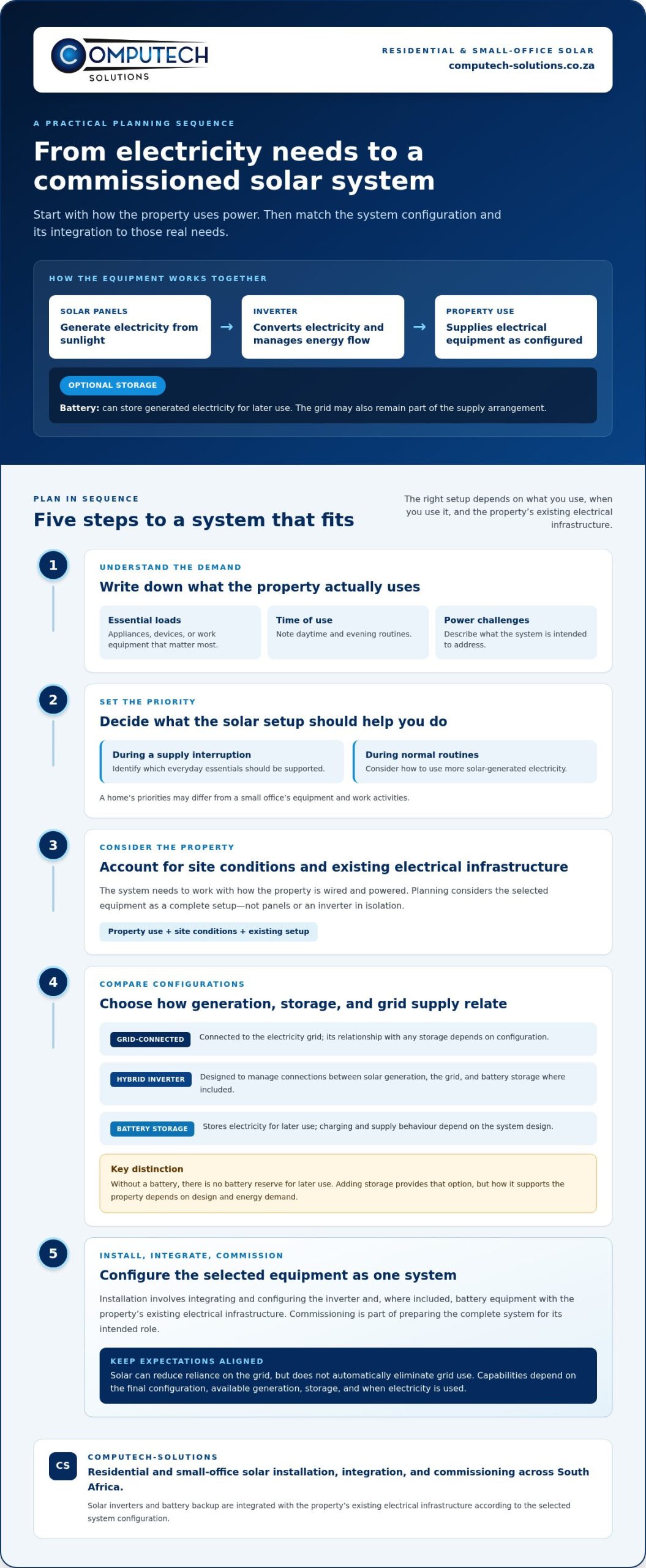
A solar system works as a chain: panels generate electricity from sunlight, an inverter converts it into a form the property’s electrical equipment can use, and the system directs energy according to its configuration. A battery, if included, can store some generated electricity for later use. The grid may also remain part of the supply arrangement.
Panels generate electricity, the inverter converts it and manages energy flow, and the battery stores energy for later use. Each component has a distinct role. Understanding these roles makes it easier to compare system types without assuming every property needs the same equipment.
What does the inverter do in a solar system?
The inverter converts electricity generated by the panels into a form that can supply electrical equipment in the property. In a system designed for storage, it also forms part of the connection between solar generation and the battery. It doesn’t store energy itself. During installation and commissioning, the inverter and related equipment are integrated with the property’s existing electrical infrastructure and configured as part of the complete system.
Three useful terms describe common system components and configurations:
- Grid-connected system: A solar setup connected to the electricity grid. Its relationship with the grid and any storage depends on the system configuration.
- Hybrid inverter: An inverter designed to manage connections between solar generation, the grid and battery storage where those components are included.
- Battery energy storage system: A battery and associated equipment that store electricity for later use. Charging and supply behaviour depend on the configuration.
These labels describe how equipment can work together, not a guaranteed level of supply. For example, a grid-connected setup without a battery has no battery reserve to draw on later. Adding storage provides that option, but how it supports the property depends on the system design and energy demand.
When does battery storage make a difference?
Storage may be useful when a property uses electricity at times that don’t align with solar generation, or when selected loads need a source of stored energy. Depending on the configuration, generated electricity can be stored and used later. A system without a battery uses solar generation as it is available, with the grid remaining part of the supply arrangement where applicable.
Neither approach is automatically best. Consider when you use electricity, which appliances or work equipment matter most, and whether your priority is using solar during generation or having stored energy available later. A home’s evening routine may create different storage priorities from a small office’s daytime working hours. Those patterns help shape a practical configuration.
For solar installation pretoria planning, share your usage pattern and details of the existing electrical setup to connect component choices with your property’s needs. Discuss your solar system requirements with Computech Solutions.
Compare solar system configurations by energy needs
System labels are useful starting points, but they don’t tell you on their own which setup suits a property. Compare configurations by their intended purpose, whether they include storage and how they relate to available grid supply. Grid availability, existing electrical infrastructure and the loads you want to support all affect the design.
| Configuration | Typical purpose | Storage | Relationship with grid supply |
|---|---|---|---|
| Grid-connected | Use solar generation as part of the property’s electricity supply. | Not included unless separately designed into the system. | Connected to the grid; reliance on grid supply depends on generation, usage and system design. |
| Hybrid | Coordinate solar generation, grid supply and battery storage in one system. | Can include batteries. | Can work with available grid supply; operation during an outage depends on the system design. |
| Battery-backed | Make stored electricity available to selected loads, according to configuration. | Included. | May be designed alongside grid supply or another arrangement; storage alone doesn’t define the grid relationship. |
How do grid-connected and hybrid systems differ?
A grid-connected setup links solar generation with the property and the electricity grid. A hybrid configuration can coordinate solar, grid supply and battery storage. Neither label guarantees power during an outage: panels alone don’t automatically keep property loads supplied if grid power fails. Outage behaviour depends on system design and applicable electrical requirements, so include the intended operation in the configuration plan.
There’s no universal winner. A property focused on using solar generation as it occurs may have different priorities from one that also wants stored energy available later. Compare systems by intended use, not by which configuration sounds more advanced. For solar installation pretoria, as for any property, the design should reflect actual loads and site conditions rather than a fixed system-size recommendation.
How should you think about battery capacity and essential loads?
Begin with a practical list of priority appliances or office equipment, then note when each needs to operate. Include routine daytime use and important evening or outage needs. This gives the design process a clearer picture of when electricity is required, without assuming a specific battery capacity or runtime before the property’s demand is understood.
- Identify the loads you consider essential.
- Record when those loads are normally used.
- Separate must-have needs from equipment that can be switched off or used at another time.
Prepare for solar installation: assessment, setup, and commissioning
A reliable installation follows a clear sequence: understand electricity needs, assess the property, plan equipment integration, install the system and commission it for its intended operation. Each stage informs the next. Site conditions and existing electrical infrastructure can affect equipment placement, configuration and connections, so start with practical information rather than assumptions.
- Record energy needs. Gather available electricity-use information and note priority appliances or work equipment, including when they’re used.
- Assess the property. Review the roof or other potential installation area and any site conditions that may affect the system plan.
- Plan integration. Consider how the selected equipment will connect with the property’s existing electrical infrastructure.
- Install. Set up the planned equipment and integrate the solar inverter and, where included, battery backup with the electrical system.
- Commission. Configure and check the installed setup for its intended operation.
What information helps shape a system plan?
Prepare a record of electricity use and a list of priority loads. Note patterns across the day, such as equipment used mainly during working hours or essential appliances used later. You don’t need to make technical assumptions; describe how the property operates and what you want the system to support.
Include details about the existing electrical setup and the roof or other area being considered for equipment. Suitability is assessed rather than assumed, since site conditions may affect the installation plan. For solar installation pretoria projects, as with projects elsewhere in South Africa, requirements can also depend on the property’s location, utility and system configuration. Check current applicable permissions and technical requirements with the relevant authority before proceeding.
What happens during installation and commissioning?
Installation puts the selected equipment in place and connects it with the property’s electrical infrastructure according to the system plan. The arrangement depends on the property and chosen configuration. During commissioning, the equipment is configured and checked for its intended operation. This completes the process, rather than treating equipment placement as the final step.
Computech Solutions provides solar system installation and commissioning for homes and small offices, including setting up and integrating solar inverters and battery backup systems with existing electrical infrastructure. Message Computech Solutions on WhatsApp to discuss your property’s energy needs and installation plan.
Plan your solar installation with Computech Solutions
A well-planned system connects the property’s energy priorities, a suitable configuration and integration with its existing electrical infrastructure. Panels, an inverter and battery storage have different roles, but equipment choices make sense only as part of a complete design. For a home or small office, start by describing what the system should support and how the property currently uses electricity.
Computech Solutions provides solar system installation and commissioning for residential and small-office use across South Africa. The service includes setting up and integrating solar inverters and battery backup systems with existing electrical infrastructure. The proposed setup needs to relate to the property’s electrical arrangements and the outcomes you want the system to support; one configuration won’t suit every property.
What does Computech Solutions handle?
Computech Solutions handles the setup and integration of solar inverters and battery backup systems as part of residential and small-office solar installation and commissioning. Integrating the equipment with the property’s existing electrical infrastructure is central to this work. It connects the selected equipment to the way the property is powered, rather than treating each component as an isolated purchase.
A system plan needs to account for both equipment and context. Priority loads, daily usage patterns, the chosen configuration and the property’s setup all help shape the installation. Sharing these details keeps the discussion focused on a system designed around your needs rather than a generic recommendation.
- Property type: Say whether the project is for a home or small office.
- Energy priorities: Identify the appliances or work equipment you want the system to support and when you use them.
- Current setup: Describe the existing electrical infrastructure and any relevant power challenges.
- System preferences: Mention whether you have considered solar generation, an inverter or battery storage, and what you have in mind.
How to take the next step
You don’t need a final equipment list or technical design to begin. A clear description of your property, energy priorities and current setup gives the discussion a useful starting point. These details help connect your needs with the system configuration and electrical integration involved in installation and commissioning.
Share the details you have through WhatsApp to discuss your residential or small-office solar installation and how inverter and battery backup integration relates to your existing electrical infrastructure. Discuss your solar installation with Computech Solutions.
Turn your solar plans into a clear project brief
Move from general ideas to a project discussion grounded in your property’s actual conditions. Before choosing equipment, decide what you want the system to support and what details still need assessment. This gives the design conversation a useful focus and keeps component decisions connected to the way your home or small office operates.
For solar installation pretoria planning, a strong starting point isn’t a predetermined system size. It’s a clear picture of your priorities, the property’s existing setup and the role you want solar to play. From there, the installation plan can be shaped around your circumstances, including the integration the property requires.
Computech Solutions works with residential and small-office projects, integrating solar inverter and battery backup systems into existing electrical infrastructure. Share your solar project with Computech Solutions on WhatsApp to take the discussion forward.
Frequently Asked Questions
Can solar panels generate electricity on cloudy days?
Yes, panels can generate electricity on cloudy days, though output may be lower than in strong direct sunlight. The amount depends on cloud cover and installation conditions, including shading and panel orientation. A cloudy morning may still contribute some generation, but plan for changing output rather than assuming the system will produce the same amount each day. Actual performance depends on the specific setup.
Will a solar system work during load shedding?
It depends on the system design. Don’t assume panels alone will keep a property powered when grid supply is interrupted. The system needs appropriate backup capability and integration for selected loads to receive power during an outage. For solar installation pretoria planning, identify which circuits or equipment matter during load shedding, then ensure the intended configuration accounts for those priorities. Operation depends on the design and electrical setup.
Do I need batteries for a solar installation?
How much roof space does a solar system need?
There’s no single roof-space figure that applies to every property. The area required depends on the planned system, the number and dimensions of panels, and how much of the roof is usable. Shading, roof orientation, obstructions and site conditions can also affect the assessment. Have the proposed installation area assessed against the property’s needs and intended equipment layout instead of relying on a generic estimate.
What happens if a solar battery runs out of stored energy?
If the battery’s stored energy is depleted, what happens next depends on the system configuration and grid availability. A grid-connected property may draw from available grid supply, while selected backup loads may no longer receive battery power if the grid is also unavailable. Decide which equipment is essential and when it must operate. The system design determines how those loads are supplied.
Does solar equipment need regular maintenance?
Solar equipment needs appropriate care, but maintenance needs vary by equipment and site conditions. Follow the manufacturer’s instructions for the installed components, and pay attention to system alerts or noticeable changes in operation. Keep access to equipment clear so it can be inspected safely when needed. If performance or operation changes unexpectedly, use the equipment documentation to guide the next step rather than assuming the cause.
Can an existing electrical system be integrated with solar?
Yes, solar equipment can be integrated with existing electrical infrastructure, with the installation plan shaped around the property’s setup. The inverter and any battery backup need to be connected as part of a coordinated system, not treated as standalone equipment. Computech Solutions provides residential and small-office solar installation and commissioning, including this integration. The property’s current electrical arrangements inform how the system is configured for its intended use.
