
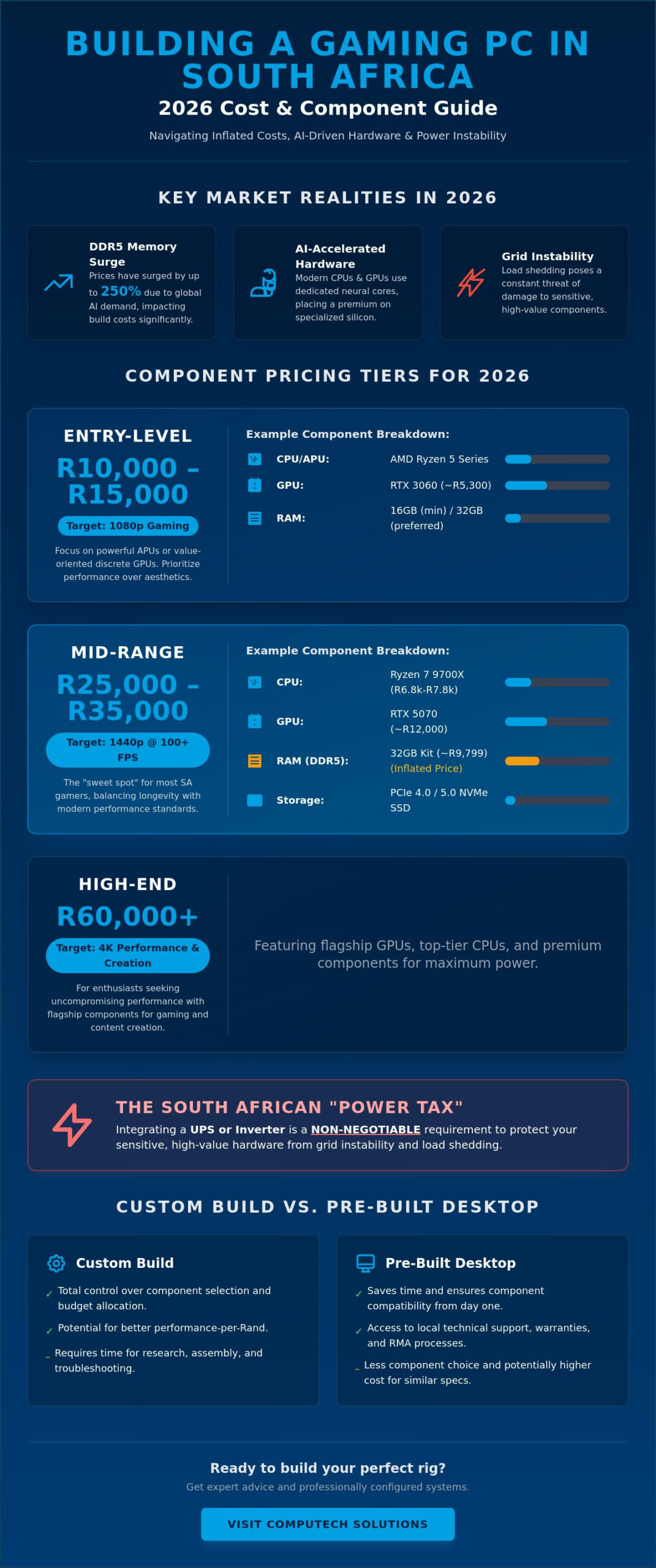
In 2026, the price of high-performance DDR5 memory has surged by up to 250 percent, fundamentally shifting how local enthusiasts approach their builds. You’ve likely noticed that the cost to build a gaming PC in South Africa 2026 feels more like a moving target than a fixed budget. Between global AI demand driving up component costs and the persistent threat of hardware damage from load shedding, the financial stakes for South African gamers have reached a critical point. We understand that navigating these market fluctuations is stressful when you want a reliable, high-performance machine.
This guide provides the definitive framework for your next project, ensuring you invest in the right performance tiers without overspending on inflated hardware. We’ll break down verified pricing for budget, mid-range, and high-end configurations while addressing the latest hardware generations. You’ll also discover how to navigate the 2026 “power tax” with essential backup solutions like UPS systems and inverters to protect your investment from grid instability. From RTX 50-series GPUs to strategic APU-first builds, we provide the technical clarity you need to build with absolute confidence.
Key Takeaways
- Identify the specific investment required for budget, mid-range, and high-end performance tiers to align your project with your gaming goals.
- Discover how to calculate the true cost to build a gaming PC in South Africa 2026 by accounting for volatile exchange rates and global component shortages.
- Learn why integrating a UPS or inverter system is a non-negotiable requirement for protecting sensitive hardware against South Africa’s power grid instability.
- Evaluate the warranty and value differences between custom configurations and pre-assembled desktop computers to ensure long-term operational efficiency.
- Master the essential maintenance routines and peripheral choices that secure the longevity and performance of your gaming rig for years to come.
The 2026 Gaming PC Landscape in South Africa
The definition of a high-performance system has evolved rapidly over the last two years. When asking What is a Gaming PC? today, the answer must include AI-accelerated hardware as a standard requirement. In 2026, core components like the CPU, GPU, and RAM are no longer just processing raw data; they utilize dedicated neural cores to upscale resolutions and generate frames in real time. This shift means that the cost to build a gaming PC in South Africa 2026 is heavily influenced by the premium placed on this specialized silicon. While a 4 to 6 percent improvement in the Rand against the US Dollar provided some relief early this year, global supply shortages for memory have largely neutralized those gains for local builders.
The “budget” entry point has shifted significantly upward since 2024. You can’t expect a capable discrete GPU system for under R10,000 anymore. Instead, entry-level builders now often start with powerful APUs (Accelerated Processing Units) to manage initial expenses. This strategy allows you to establish a functional foundation and add a dedicated graphics card when your budget allows. Central to this foundation is the Power Supply Unit (PSU). It’s frequently the most overlooked component, yet it remains the most critical for protecting your expensive investment against local grid instability and voltage fluctuations.
Why 2026 is a Turning Point for Builders
The industry is currently navigating a transition toward DDR6 memory and PCIe 6.0 standards, which promise to double the bandwidth of previous generations. This shift makes component selection more complex as builders weigh current availability against future-proofing. AI-driven upscaling technologies have also changed the value proposition of GPUs. You don’t necessarily need the most expensive card to achieve high-fidelity results if the software can bridge the gap. For most South African gamers, the 2026 mid-range performance target is now firmly established as 1440p resolution at 100+ FPS.
The Local Market Reality
Importing hardware into South Africa involves navigating 15 percent VAT and specific duties, which adds a layer of complexity to pricing. While international sites might show lower base prices, the total landed cost often exceeds local retail figures once shipping and taxes are applied. Choosing established local retailers provides access to technical support and local warranties that are essential for high-value electronics. These specialists offer a layer of security that international shipping can’t match, ensuring that if a component fails, your downtime is minimized through local RMA processes.
Component Pricing Tiers: From Budget to High-End
The total cost to build a gaming PC in South Africa 2026 is defined by your target resolution and frame rate. Performance is the absolute priority. While the allure of synchronized RGB lighting is significant for many builders, we recommend prioritizing raw processing power and reliable power delivery components first. In a market where component prices are volatile, every Rand spent on aesthetics is a Rand taken away from your GPU or thermal management. Most local enthusiasts find their best value in the mid-range tier, where hardware longevity meets modern performance standards.
Entry-Level: The R10,000 to R15,000 Build
This tier focuses on 1080p gaming. At the lower end of this bracket, builders often utilize high-performance APUs like the AMD Ryzen 5 series to bypass the cost of a dedicated graphics card. If you opt for a discrete GPU, a mid-range card like the RTX 3060 remains a viable entry point at approximately R5,300. You must budget for at least 16GB of RAM, though current software demands are quickly making 32GB the preferred standard. If you prefer a ready-to-use solution, exploring professionally configured desktop computers can save time and ensure component compatibility from day one.
Mid-Range: The R25,000 to R35,000 Powerhouse
This is the “sweet spot” for the South African market. These rigs are designed for 1440p gaming at high refresh rates. You’ll likely select a CPU like the Ryzen 7 9700X, priced between R6,800 and R7,800, paired with an upper mid-range GPU such as the RTX 5070 for roughly R12,000. Be aware that DDR5 RAM prices are currently inflated due to global AI demand. A 32GB kit can cost upwards of R9,799. We suggest balancing this with a PCIe 4.0 or 5.0 NVMe SSD to ensure your storage speeds don’t bottleneck your processor.
High-End: R60,000+ Enthusiast Rigs
Enthusiast builds are designed for uncompromising 4K performance and content creation. These systems feature flagship GPUs like the RTX 5080, which sits around R23,999, or even higher-tier cards that can exceed R32,000. These high-TDP components generate significant heat, making high-quality liquid cooling systems a requirement rather than a luxury. To justify the cost to build a gaming PC in South Africa 2026 at this level, you should pair the tower with a high-refresh-rate 4K monitor. Without the correct display, the raw power of these components is essentially wasted.
The South African “Power Tax”: UPS and Inverters
Building a high-end rig requires more than just high-quality internal components. In our local context, a standard Power Supply Unit (PSU) is simply not enough to ensure operational stability. The cost to build a gaming PC in South Africa 2026 includes a mandatory “power tax” for protection against grid instability. Frequent power surges and abrupt outages during load shedding can cause catastrophic failure in sensitive silicon, often bypassing the internal protections of even the most expensive PSUs. You need a comprehensive power strategy to safeguard your investment.
You must distinguish between a basic Uninterruptible Power Supply (UPS) and a dedicated inverter system. A UPS is designed to provide a few minutes of runtime, allowing for a safe system shutdown to prevent data corruption or OS failure. In contrast, a full inverter system provides the sustained output necessary to keep your rig running through an entire load shedding block. With Eskom tariffs increasing by over 12 percent in 2025, moving toward energy resilience isn’t just about hardware protection; it’s a strategic financial decision for long-term operational efficiency.
Protecting Your Investment from Load Shedding
Modern gaming computers utilize Active Power Factor Correction (PFC) within their power supplies. These components require a “Pure Sine Wave” output from your backup source to function correctly. Using a cheaper simulated sine wave inverter can lead to hardware stress, audible coil whine, or immediate system crashes. To maintain a standard two-hour gaming session, you need to calculate your battery capacity based on your total system draw, including your monitor and peripherals. High-quality surge protection plugs should serve as your first line of defense, acting as a sacrificial barrier against the high-voltage spikes that often occur when the grid is restored.
Integrating Solar Power Solutions
Transitioning your gaming setup to a solar-hybrid system offers the ultimate level of hardware security and operational efficiency. These systems allow you to bypass grid reliance entirely during daylight hours while charging lithium batteries for evening sessions. Professional commissioning is vital here. An incorrectly configured inverter can void the warranties on your individual PC components if it delivers unstable voltage. If you want to ensure your rig remains operational regardless of the national power schedule, you can explore Solar Power Solutions to keep your rig running during outages. This investment effectively future-proofs your gaming environment against rising electricity costs and technical disruptions.
Custom Build vs. Pre-Built Desktops
Choosing between a custom configuration and a pre-assembled system is a pivotal decision for any enthusiast. While the raw cost to build a gaming PC in South Africa 2026 might appear lower when purchasing individual parts, you must account for the value of your time and the technical risks involved. Custom builds offer unparalleled flexibility, but they require a significant investment in research and assembly. Conversely, a pre-built system provides a streamlined solution that eliminates the stress of component compatibility and potential assembly errors. For many, the reassurance of a professionally tested machine outweighs the minor cost savings of a DIY project.
Warranty management is where these two paths diverge most sharply. When you build your own rig, each component carries an individual warranty with its respective manufacturer or local distributor. If a failure occurs, you’re responsible for diagnosing the specific faulty part and managing the RMA process. A pre-built desktop offers a comprehensive, system-wide warranty. This single point of contact simplifies technical support and ensures that operational risks are managed by professionals. This provides the stability and confidence that many high-level users prioritize when investing in expensive hardware.
Delivery logistics also play a significant role in the 2026 market. Modern retailers offer “Click and Ship” nationwide delivery, ensuring your hardware arrives safely regardless of your location. For those who need a reliable machine without the multi-day time investment required for a first-time build, a pre-assembled solution is often the most efficient choice. You can find a wide range of reliable desktop computers and laptops that meet these high standards, allowing you to focus on your performance goals rather than technical troubleshooting.
The Case for Custom Building
Custom building grants you granular control over every aspect of your machine. You can select specific brands for your motherboard or PSU based on their reputation for stability. This path also offers significant educational value. You’ll gain a deep understanding of your hardware’s internal architecture, which makes future maintenance more manageable. Because custom rigs use standard ATX parts, you benefit from easier long-term upgradeability as new hardware generations emerge, ensuring your system remains relevant for years.
Why Pre-Built Desktops Win in 2026
In 2026, the complexity of AI-accelerated hardware makes professional assembly more attractive. Pre-built systems undergo rigorous stress testing and come with pre-installed software environments that are optimized for immediate performance. You don’t have to worry about cable management or BIOS updates; the system arrives ready for high-load tasks. To ensure you receive a machine built for maximum operational efficiency, browse our range of Desktop Computers for reliable performance.
Maintenance and Longevity: Beyond the Initial Build
The total cost to build a gaming PC in South Africa 2026 extends beyond the initial assembly. You must view your rig as a long-term asset that requires consistent maintenance to preserve its performance and market value. Hidden costs like high-quality thermal paste, specialized cleaning kits, and software licenses often go unaccounted for in initial budget spreadsheets. Neglecting these small investments can lead to thermal throttling or hardware degradation, effectively wasting the premium you paid for high-end silicon. A proactive maintenance schedule ensures that your machine remains stable and efficient throughout its lifecycle.
Peripherals also play a critical role in the overall value proposition. Investing in a flagship GPU is a hollow victory if your monitor, keyboard, and mouse cannot translate that raw power into a responsive gaming experience. High-quality input devices and color-accurate displays should be considered core components of your budget rather than afterthoughts. Additionally, securing expert technical support for periodic deep cleans and BIOS optimizations can significantly extend the life of your hardware, preventing the need for premature and expensive replacements.
The Mobile Gamer’s Dilemma: Laptop Maintenance
Gaming laptops face unique operational risks due to their compact thermal designs and high power density. These machines require more frequent attention than their desktop counterparts, particularly regarding power delivery and heat management. The intense heat generated during 1440p or 4K gaming sessions can accelerate the degradation of internal battery cells and stress the capacitors within your power adapter. If you experience unexpected shutdowns, a “plugged in, not charging” status, or notice the battery casing starting to swell, you must take immediate action to prevent internal chassis damage. You can find high-quality Replacement Laptop Batteries for all major brands to restore your system’s reliability and portable performance.
Upgrading Strategically
A “Step-Up” approach is the most cost-effective way to manage your hardware’s relevance. Instead of a total system overhaul every few years, aim to upgrade one primary component, such as your GPU or primary NVMe drive, on an annual or biennial basis. This strategy keeps your performance floor high without requiring a massive capital outlay. For those using mobile workstations or gaming laptops, replacing specific parts like Laptop LCD Replacement Panels is often more financially sound than purchasing an entirely new unit. You should replace your thermal paste every 24 months to ensure optimal heat transfer and cooling efficiency.
Securing Your High-Performance Future
Building a modern system requires a strategic approach that balances raw power with operational resilience. You’ve seen that the cost to build a gaming PC in South Africa 2026 is influenced by more than just component prices; it’s a total investment in hardware, power protection, and long-term maintenance. By prioritizing essential components like high-efficiency PSUs and pure sine wave inverters, you protect your rig from the unpredictable nature of the local grid. Whether you choose a custom DIY project or a professionally assembled desktop, success lies in selecting parts that offer both current performance and a clear upgrade path.
Maintaining your system with regular thermal paste replacements and high-quality peripherals ensures your investment remains relevant for years to come. Shop Expert-Vetted Computer Hardware at Computech-Solutions to access our specialized solar and power backup expertise, expert technical support, and reliable nationwide delivery across South Africa. Your next-generation gaming experience is within reach when you build with the right partner.
Frequently Asked Questions
How much does it cost to build a decent gaming PC in South Africa in 2026?
A capable mid-range configuration typically ranges between R20,000 and R35,000 in the current market. While entry-level APU builds can start lower, the total cost to build a gaming PC in South Africa 2026 for high-end enthusiasts often reaches R60,000 or more. Your final expenditure is dictated by your target resolution and the specific performance requirements of modern AI-accelerated titles.
Is it cheaper to build a gaming PC or buy a pre-built one in ZA?
Building a PC often provides better component-level value, but pre-built systems include professional assembly and comprehensive warranties. For many South African users, the time saved and the technical security of a pre-tested machine justify the small price premium. Pre-built desktops also eliminate the risk of individual component compatibility issues during assembly.
What is the most expensive part of a gaming PC build?
The Graphics Processing Unit (GPU) is consistently the most significant expense, often accounting for nearly half of the cost to build a gaming PC in South Africa 2026 at the enthusiast level. In the current landscape, upper mid-range cards like the RTX 5070 sit around R12,000. This makes the GPU the most critical component to research for long-term performance value.
Do I need a UPS for my gaming PC in South Africa?
A UPS is a non-negotiable requirement for anyone building in the local context. It provides the critical window needed for a safe system shutdown, preventing data corruption and protecting the operating system during sudden outages. Without this layer of protection, your internal hardware is constantly exposed to the risks of an unstable grid.
Can I run a gaming PC on a solar power system?
You can certainly run a gaming rig on solar power if your system includes a hybrid inverter and sufficient lithium battery capacity. This configuration bypasses load shedding schedules and protects your hardware from the high-voltage spikes common during grid restoration. It’s a strategic long-term investment that reduces your reliance on rising electricity tariffs.
Where is the best place to buy computer components with nationwide delivery?
Specialized local retailers like Computech-Solutions are the most reliable sources for hardware with nationwide delivery. Purchasing through established local channels ensures your warranties are enforceable within South Africa and provides access to expert technical support. This approach is significantly safer than importing parts individually, which often leads to hidden duties and shipping delays.
How long does a custom-built gaming PC usually last?
A custom rig generally remains viable for five to seven years if you follow a consistent maintenance schedule. Strategic upgrades to your GPU or RAM every few years can keep the system capable of running modern titles at high settings. Regular cleaning and thermal paste replacement are essential to prevent heat-related performance degradation over time.
What happens if I use a cheap power supply in my gaming rig?
Using a low-quality power supply risks the safety of every internal component. These units often lack the voltage regulation and surge protection found in 80+ Bronze or Gold rated models, making them a primary point of failure during electrical fluctuations. Saving money on a PSU is a false economy that can lead to catastrophic hardware loss.
