
A solar power system is more than just a collection of hardware. It is a precision-engineered ecosystem designed to bridge the gap between an unstable grid and your need for continuous uptime. Understanding exactly what are the components of a solar power system is the first step toward securing your home office and protecting your sensitive electronics from the erratic surges of load shedding. You’ve likely felt the stress of worrying whether a new setup will actually withstand the local climate or if technical jargon like kWh and Amps is masking an inferior product.
We understand that you need a solution that works without constant troubleshooting. This 2026 guide provides a clear roadmap to the essential hardware required to build a resilient solar solution that protects your electronics and beats load shedding for good. We will distinguish between must-have parts and optional extras, giving you a definitive shopping list for a system that delivers stability. You’ll gain the confidence to choose high-quality, certified equipment that keeps your digital life running through every stage of grid instability.
Key Takeaways
- Learn how the synergy between solar panels, lithium batteries, and inverters creates a continuous energy loop to keep your home office operational.
- Discover why hybrid inverters are essential for South African users to manage multiple power sources and understand what are the components of a solar power system required for total energy independence.
- Identify the critical “unseen” hardware in the Balance of System that ensures your installation remains SANS-compliant and safe for long-term use.
- Gain technical insights into calculating base loads and inrush current to protect sensitive hardware like desktop computers and laptops from power fluctuations.
- Understand the legal necessity of a Certificate of Compliance (CoC) to maintain your property value and ensure your insurance remains valid.
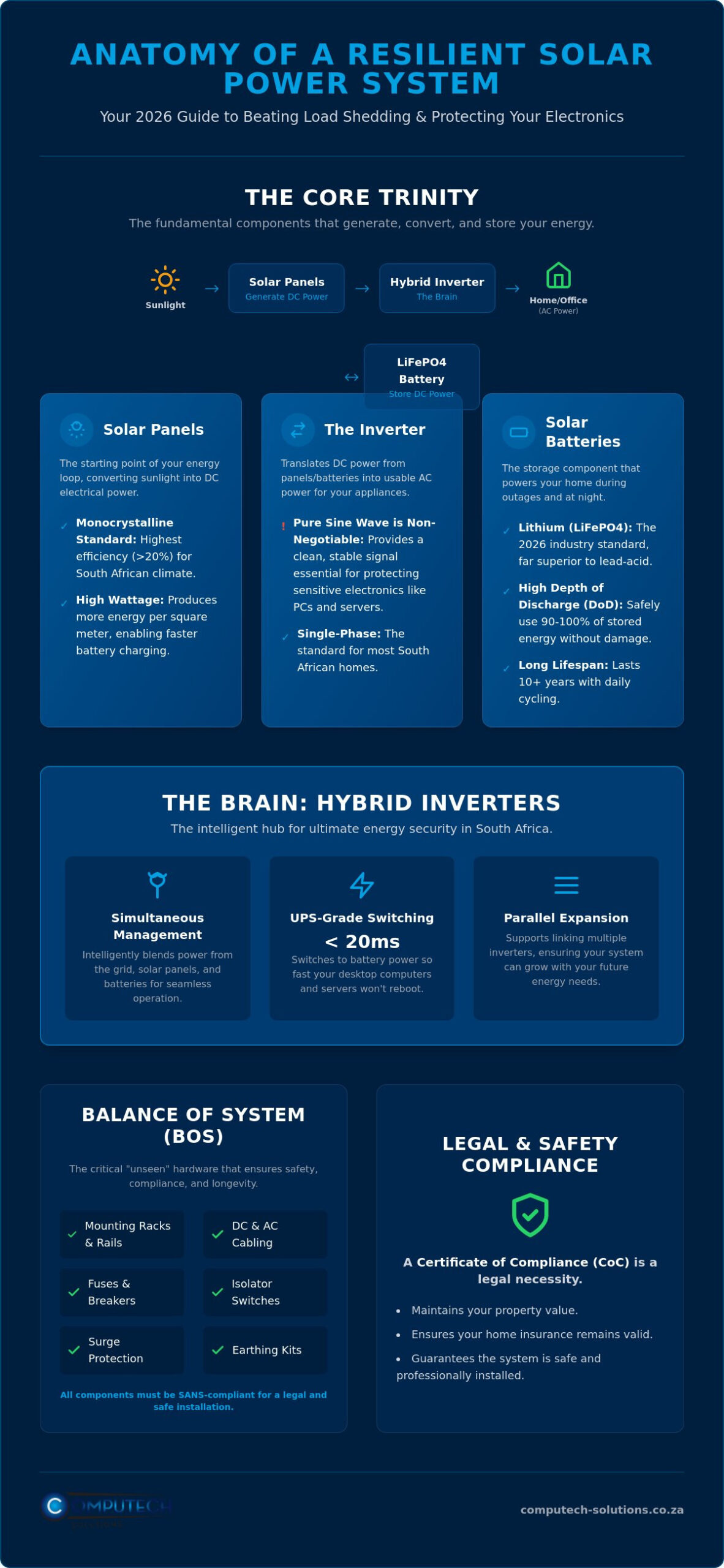
The Core Trinity: Solar Panels, Inverters, and Batteries
To build a truly resilient energy solution, you must understand how individual parts interact to maintain your uptime. A professional Photovoltaic system relies on a foundation of three primary pillars. These parts work in a continuous loop to generate, convert, and store energy. If you’re wondering what are the components of a solar power system that will actually survive the South African climate, you need to focus on the synergy between panels, inverters, and batteries. Sizing this “Core Trinity” correctly is the only way to ensure your peak demand doesn’t trip the system during a critical work session.
In South Africa, the choice of configuration determines your level of independence. Grid-tied systems are cost-effective but shut down during load shedding to protect technicians working on the lines. Off-grid systems offer total independence but require massive, expensive battery banks. Hybrid configurations are the dominant choice for 2026. They allow you to blend grid and solar power, providing a seamless transition that keeps your desktop computers and networking gear running without a flicker.
Solar Panels (The Generation Component)
Solar panels are the starting point of the energy loop. They use photovoltaic cells to capture photons from the sun, which creates a Direct Current (DC) flow. In the South African market, Monocrystalline panels have become the standard due to their high efficiency ratings, often exceeding 20%. While Polycrystalline panels are available, Monocrystalline units perform better in the intense heat and limited roof space common in local residential areas. Understanding the wattage rating is vital; higher wattage panels produce more energy per square meter, which directly impacts your daily yield and your ability to recharge batteries quickly between load shedding stages.
The Inverter (The Conversion Component)
The inverter acts as the brain of your installation. Its primary job is to translate the DC power from your panels or batteries into the Alternating Current (AC) used by your household appliances. For anyone running sensitive electronics like laptops or servers, Pure Sine Wave technology is non-negotiable. It provides a clean, stable signal that mimics the grid. Cheaper “modified sine wave” inverters can cause overheating or permanent damage to your hardware. Most South African homes require a single-phase inverter, but if you’re managing a small business with heavy machinery, a three-phase unit may be necessary to balance the load across multiple circuits.
Solar Batteries (The Storage Component)
Storage is the component that bridges the gap during evening hours or Eskom outages. By 2026, the industry has shifted almost entirely toward Lithium Iron Phosphate (LiFePO4) units, leaving older lead-acid technology behind. LiFePO4 batteries are superior because of their high Depth of Discharge (DoD). You can safely use up to 90% or even 100% of the stored energy without damaging the cells. This efficiency means you can buy a smaller, more compact battery that still outperforms a bulky lead-acid bank. High-quality lithium units also offer longer lifespans, often lasting 10 years or more with daily cycling.
The Brain of the Operation: Understanding Hybrid Inverters
Hybrid inverters represent the gold standard for South African energy security. While basic setups might separate conversion and management, a hybrid unit integrates these functions into a single intelligent hub. It manages power from the grid, solar panels, and batteries simultaneously. This capability is critical for anyone wondering what are the components of a solar power system that can handle unpredictable load shedding without interruption. One of the most vital features for professionals is the UPS-grade switching speed. High-quality hybrids can switch to battery power in less than 10 to 20 milliseconds. This speed is fast enough to prevent desktop computers or servers from rebooting when the grid drops away.
Modern hybrid units are also designed with future growth in mind. Many models support parallel expansion, allowing you to link multiple inverters together as your energy requirements increase. This modularity ensures that your initial investment remains relevant even if you add more air conditioning units or heavy machinery to your property later. By centralizing the management of every energy source, the hybrid inverter eliminates the technical friction often found in fragmented, older systems.
Integrated Charge Controllers
Every hybrid inverter contains a charge controller to regulate the flow of electricity into your battery bank. This component prevents overcharging and ensures long-term battery health. You should prioritize MPPT (Maximum Power Point Tracking) over the older PWM (Pulse Width Modulation) technology. According to standard Solar Photovoltaic System Design Basics, MPPT controllers can increase energy harvest by up to 30% in variable weather conditions. This efficiency is particularly important during cloudy days in South Africa when you need to squeeze every possible watt out of your array to keep your office running. Ensuring your controller can handle the specific voltage of your panel array is a vital step in the design process.
Smart Energy Management
Sophisticated programming priorities are what set hybrid systems apart from simpler backups. You can set the system to use solar power first, then battery storage, and only pull from the grid as a last resort. This smart management is typically accessible through mobile apps, allowing you to track production and consumption in real-time from anywhere. It’s also how the system handles “surge” loads. When a kettle or water pump starts up, it requires a brief burst of high current. A robust inverter manages this peak without tripping, provided you’ve accounted for these surges when deciding what are the components of a solar power system required for your specific household needs.
Balance of System (BoS): The Essential “Unseen” Parts
While solar panels and inverters are the most visible parts of an installation, the Balance of System (BoS) encompasses the infrastructure that holds the entire ecosystem together. If you’re researching what are the components of a solar power system, don’t overlook these “unseen” elements. High-quality BoS components are critical for system safety and SANS compliance in South Africa. They represent the difference between a reliable, long-term investment and a potential electrical hazard. The U.S. Energy Information Administration explains solar energy as a multifaceted technology where the supporting infrastructure is just as important as the photovoltaic cells themselves. Without robust BoS parts, your expensive inverter and battery bank remain vulnerable to environmental wear and electrical faults.
Protection devices are the primary defense against electrical fires and equipment damage. In the South African context, where grid instability and lightning strikes are frequent, these components aren’t optional extras. They’re mandatory for a legal installation. Additionally, the quality of your cabling and connectors directly impacts the overall efficiency of power transmission. Poorly selected BoS parts lead to energy loss through heat, which reduces the amount of usable electricity reaching your appliances.
Mounting and Racking Systems
The choice between roof mounts and ground mounts depends on your property’s layout and orientation. Most residential users opt for roof-integrated racking, but ground mounts are superior for large properties because they allow for better airflow and easier maintenance. Material choice is vital; anodized aluminium is the preferred standard for 2026 due to its exceptional corrosion resistance. It’s also essential to ensure your racking is wind-rated for local conditions. High-velocity winds can easily displace panels if the mounting system isn’t engineered for the specific stresses of the South African climate.
Cabling and Connectors
Cabling serves as the circulatory system of your installation. You must use UV-resistant DC solar cabling for any outdoor runs to prevent the insulation from cracking under the harsh sun. MC4 connectors are the industry standard, but the quality of the “crimping” during installation determines the reliability of the connection. Loose or poorly crimped connectors are a leading cause of arc fires. You must also account for voltage drop. Choosing the correct cable thickness, or cross-section, is necessary for long distances to ensure that power isn’t wasted as it moves from the roof to your inverter.
Switchgear and Protection
Switchgear provides the necessary control and safety layers for your system. DC Isolators are mandatory, as they allow technicians to safely disconnect the panels for maintenance without shutting down the entire house. Surge Protection Devices (SPDs) are equally vital to guard your electronics against lightning strikes and grid spikes. Fuses and breakers act as the final line of defense. These components are what you actually need when asking what are the components of a solar power system that protect your property value and ensure your insurance remains valid in the event of an electrical surge.
Designing for Resilience: Sizing Components for IT Loads
Designing for resilience means moving beyond a generic setup to a tailored energy profile. While you now know what are the components of a solar power system, the sizing of those parts determines whether your home office survives Stage 6 load shedding. For IT professionals, the primary focus is maintaining the uptime of laptops, monitors, and networking gear. This requires a precise understanding of your power budget to avoid system trips during critical meetings. A common mistake is ignoring inrush current. Devices like laser printers or high-end servers can pull significantly more power during startup than their steady-state consumption. Your inverter needs enough headroom to handle these brief spikes without shutting down.
There is also a strong synergy between a stable solar backup and the longevity of your hardware. By providing a consistent voltage, you prevent the wear and tear that leads to premature failure of your internal components. If your current mobile workstation is struggling to hold a charge between power cycles, investing in high-quality replacement laptop batteries ensures your hardware remains as resilient as your power supply. Matching your battery capacity to the duration of your longest expected outage is the final step in securing your digital workspace.
Calculating Your Power Budget
Start by adding up the wattage of your “Must-Run” devices. A typical laptop might pull 60W, while a 27-inch monitor adds another 30W. To calculate the required battery watt-hours for a 4-hour or 8-hour outage, multiply your total wattage by the number of hours you need to stay offline. Base Load is the minimum power required to keep essential IT systems active. If your base load is 200W, you need at least 1.6kWh of usable battery capacity to survive an 8-hour load-shedding block without dipping below safe discharge levels.
Protecting Sensitive Electronics
Pure Sine Wave output is mandatory for laptop chargers and PC power supplies. Cheaper inverters produce a blocky “modified” wave that generates heat and can eventually fry sensitive circuitry. Your solar inverter also plays a critical role in filtering “dirty” grid power. When the grid is restored after load shedding, voltage spikes are common. A high-quality hybrid inverter isolates your equipment from these surges, acting as a sophisticated shield. This stable environment significantly extends the life of your internal laptop batteries by reducing the number of stressful discharge cycles they endure during the day.
Implementation: Professional Commissioning and Support
Selecting high-quality hardware is only the first phase of securing your energy independence. Professional commissioning ensures that every part operates within its intended parameters. While local regulations are paramount, the high standards set by established providers like G-Solar & Electrical demonstrate that professional oversight is the only way to guarantee long-term performance. In South Africa, professional installation is a non-negotiable requirement for insurance validity and legal compliance. Without a certified technician, you risk voiding warranties on high-value items like hybrid inverters and lithium batteries. A critical document in this process is the Certificate of Compliance (CoC). This certificate is a legal requirement that confirms your installation meets national safety standards. It also protects your property value, as most banks and buyers won’t finalize a home sale without a valid CoC for any electrical modifications.
Long-term maintenance is equally vital for protecting your investment. You should regularly monitor your components for peak performance using the digital tools provided with your inverter. Identifying a drop in panel yield or a battery communication error early can prevent a total system failure during a power outage. When you understand what are the components of a solar power system, you realize that the interaction between the inverter’s software and the battery’s management system is where true reliability is found.
The Commissioning Process
The commissioning process involves rigorous testing to ensure system stability. Technicians verify string voltages to confirm that the solar panels are delivering the expected power to the inverter. They also configure battery communication protocols, which allow the inverter to talk to the battery management system for optimal charging and discharging. Settings must be fine-tuned for local grid conditions to prevent unnecessary tripping during voltage fluctuations. These final safety checks conclude with a comprehensive handover, ensuring you know how to read your system’s data and manage your loads effectively.
Computech-Solutions: Your Technical Partner
At Computech-Solutions, we bridge the gap between hardware procurement and technical expertise. We leverage our deep experience in IT hardware to help you select components that provide superior protection for your digital assets. Whether you’re running a home office on high-end laptops or managing a fleet of desktop computers, we understand the power requirements of your hardware. We provide nationwide delivery of solar components and power accessories, including replacement laptop batteries for brands like Dell, HP, Lenovo, and Apple. Our team offers the technical support needed for commissioning and troubleshooting, ensuring your transition to solar is seamless. Explore our solar inverters and battery solutions here.
Securing Your Energy Future
Building a resilient energy solution requires a holistic approach that balances high-efficiency generation with intelligent storage and professional safety standards. You’ve seen that understanding what are the components of a solar power system is only the beginning. True reliability comes from selecting hybrid inverters with UPS-grade switching speeds and ensuring every unseen part of the Balance of System meets SANS compliance. This precision engineering protects your sensitive IT hardware from the chronic instability of the national grid while maintaining the value of your property through a valid Certificate of Compliance, allowing you the peace of mind to enjoy luxury south africa travel packages across the country.
Computech-Solutions provides the specialized hardware and technical expertise needed to transition to a stable power environment. We offer nationwide delivery across South Africa and expert technical support for both IT and power systems to ensure your installation performs at its peak. Don’t leave your digital operations to chance. Browse Solar Power Solutions and Backup Components today to build a system that delivers total operational confidence. Your path to energy independence is within reach.
Frequently Asked Questions
What is the most important component of a solar power system?
The hybrid inverter is the most critical component because it acts as the central brain for the entire installation. It manages the conversion of DC power from your panels, regulates the charging of your battery bank, and controls the interface with the national grid. Without a high-quality inverter, the other parts of the system cannot communicate effectively or protect your sensitive electronics.
Do I need batteries if I only want to save money on my electricity bill?
You don’t strictly need batteries if your primary goal is to reduce daytime electricity costs through a grid-tied setup. However, batteries are essential for South Africans who need to maintain uptime during load shedding. Storing excess solar energy for use at night also increases your overall savings by reducing your reliance on expensive evening grid tariffs.
How long do solar batteries typically last in South Africa?
Modern Lithium Iron Phosphate (LiFePO4) batteries typically last between 10 and 15 years when managed correctly. High-quality units available in 2026 are often rated for 6,000 cycles or more at an 80% depth of discharge. This lifespan is significantly longer than older lead-acid technology, which often fails within 3 years under the stress of daily load shedding cycles.
Can I add more panels or batteries to my system later?
You can expand your system later provided your inverter supports parallel configuration or has enough spare input capacity. Adding more panels increases your daily energy generation, while adding batteries extends your backup duration during long outages. It’s vital to ensure that any new what are the components of a solar power system you purchase are compatible with your existing hardware and voltage requirements.
What is the difference between a string inverter and a microinverter?
A string inverter manages a series of panels as a single group, which is a cost-effective solution for roofs with consistent sun exposure. Microinverters are installed on each individual panel, allowing them to operate independently. This is the superior choice for complex roofs with shading issues, as a single shaded panel won’t reduce the output of the entire array.
Is a solar power system the same as a UPS?
A solar power system is a complete energy generation and storage solution, while a standard UPS only stores grid power for temporary use. Solar setups allow you to generate your own electricity, making them a sustainable choice for those researching what are the components of a solar power system for long-term independence. A UPS is a reactive backup, whereas solar is a proactive energy source.
Do solar panels work during load shedding if I don’t have a battery?
Standard grid-tied solar panels will not provide power during load shedding if you don’t have a battery backup. These systems are designed to shut down automatically during an outage to prevent electricity from flowing back into the grid, which is a vital safety requirement for technicians. A hybrid inverter with a battery is necessary to create a localized power “island” for your home.
What maintenance do the components of a solar system require?
Solar systems require minimal maintenance, primarily involving the cleaning of panels to remove dust and debris that block sunlight. You should also have a professional inspect your electrical connections and switchgear once a year to ensure everything remains tight and corrosion-free. Monitoring your system’s performance through its mobile app is the easiest way to identify if any parts require technical attention.
